


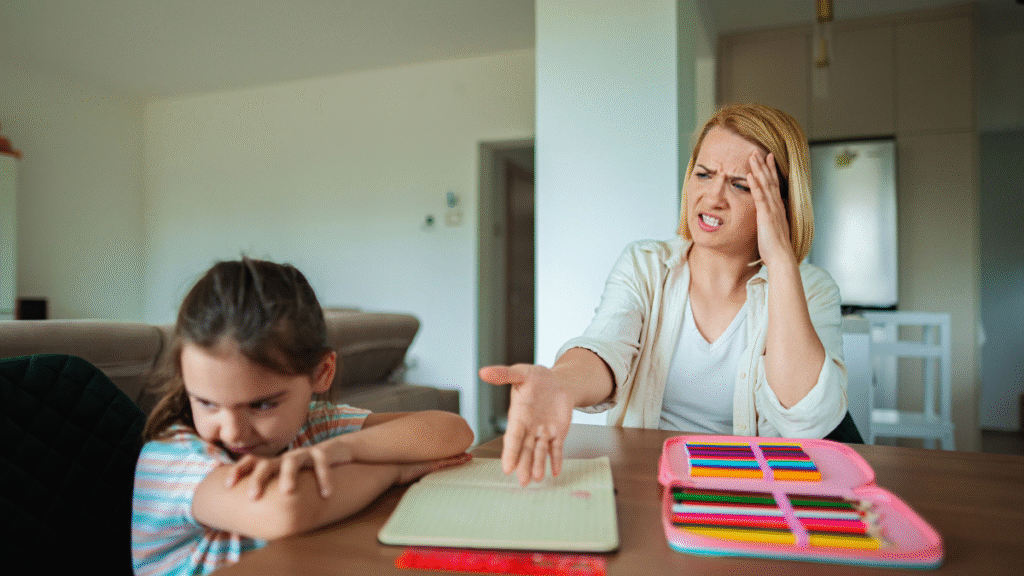
If you homeschool or support your child’s learning at home, you have probably faced this moment. You sit down ready to start the day, and your child refuses. They stall, complain, shut down, or flat out say no. It can feel frustrating, personal, and exhausting.
The truth is this happens in every type of learning environment. It is not a failure of parenting or homeschooling. It is often a signal that something deeper is going on.
Let’s talk about what might be behind the resistance and what you can do about it.
Start by Asking Why
Before changing schedules or consequences, pause and ask yourself why your child might be resisting their work.
Common reasons include feeling overwhelmed, struggling with the material, boredom, anxiety about making mistakes, or mental and physical fatigue. Sometimes children do not have the words to explain what they are feeling, so refusal becomes their way of communicating.
A simple conversation can make a big difference. Ask calm, open questions and listen without correcting or rushing to fix the problem.
Break the Work into Smaller Pieces
Large assignments can feel impossible to children, even when the work itself is not difficult. Instead of asking them to complete an entire lesson, try breaking it into smaller steps.
For example, instead of saying, “Finish your writing assignment,” try, “Let’s write the first sentence together.” Once that step is complete, move on to the next. Progress often builds momentum.
Adjust the Environment
Sometimes the issue is not the work but the setting. Noise, clutter, or distractions can make it hard for children to focus.
Try changing locations. A quiet corner, the kitchen table, a library, or even a different time of day can help. Some children focus better after movement, a snack, or a short break.
Offer Choices, Not Power Struggles
Children often resist work when they feel they have no control. Offering simple choices can reduce pushback while still getting the work done.
You might say, “Do you want to start with reading or writing?” or “Would you rather work for fifteen minutes now or take a short break and start in ten minutes?” Choices give children a sense of ownership without removing expectations.
Focus on Effort, Not Perfection
Many children shut down because they are afraid of being wrong. If they believe their work has to be perfect, starting can feel risky.
Praise effort instead of outcomes. Let your child know that trying matters more than getting everything right. Mistakes are part of learning, not something to avoid.
Get Your Downloadable Checklists --> Parent Checklist Child Checklist
Build Consistent Routines
Consistency helps children know what to expect. A predictable routine can reduce anxiety and resistance.
This does not mean your homeschool day has to be rigid. It simply means having a general rhythm that your child recognizes. When expectations are clear, children often feel more secure and cooperative.
Know When to Pause
There are times when pushing through does more harm than good. If your child is clearly overwhelmed, emotionally drained, or exhausted, stepping back can be the best choice.
Learning is not a race. One hard day does not define your homeschool or your child’s future.
You Do Not Have to Do This Alone
Supporting a child who resists schoolwork can be emotionally taxing. It is okay to seek support, whether through structured curriculum, outside classes, or teacher feedback.
Sometimes a different voice, format, or pace can make learning feel manageable again. Support does not mean you have failed. It means you are responding thoughtfully to your child’s needs.
Final Thoughts
When your child does not want to do their schoolwork, it is rarely about laziness. It is usually about feelings, confidence, or overwhelm.
Approach the situation with curiosity instead of frustration. Small adjustments, empathy, and patience can lead to big changes over time.
You are not behind. You are learning alongside your child, and that is part of the homeschooling journey.
And, don’t be afraid to outsource. Sometimes, it is difficult for our children to make the distinction of us being both parent and educator.
Check out Academy classes --> HERE