Teacher Jade’s Writing Academy

How to Annotate a Book: Creating a Unit Study

A simple guide for homeschool parents

Reading a great book is only the beginning. With a few notes and annotations, you can turn almost any novel into a meaningful unit study.

Step 1: Start With Your Purpose

Before you begin reading, think about what you want your child to learn.

Ask yourself:

  • What themes or lessons can we explore?
  • Are there historical, scientific, or social connections?
  • What writing skills can we practice?
  • What questions might lead to deeper discussions?

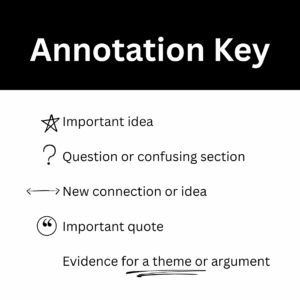
Step 2: Annotate Important Moments

As you read, mark sections that stand out.

Look for:

Character Development

  • How does the character change?
  • What choices reveal their personality?
  • What challenges do they face?

Conflict

  • What problems does the character encounter?
  • How are those problems solved?

Important Quotes

  • What lines reveal a major idea?
  • What words or phrases are repeated?

Themes

  • What bigger message is the author sharing?
  • What ideas continue throughout the story?

Step 3: Create Discussion Questions

Good discussion questions help students think beyond the plot.

Instead of asking:

“What happened in this chapter?”

Try asking:

  • Why do you think the character made that choice?
  • Do you agree with the character’s decision? Why or why not?
  • What evidence from the story supports your opinion?
  • How does this connect to the real world?
  • What would you have done differently?

Step 4: Collect Vocabulary

Create a list of words students can explore.

Include:

  • Unfamiliar words
  • Interesting descriptions
  • Words connected to the book’s themes
  • Vocabulary that strengthens writing

Extension idea:
Have students use new vocabulary in their own writing.

Step 5: Add Writing Assignments

Your annotations can become writing activities.

Ideas:

Literary Analysis

  • Analyze a character’s growth
  • Explain a theme
  • Explore the author’s message

Opinion Writing

  • Do you agree with a character’s choice?
  • Was a decision fair or justified?

Creative Writing

  • Rewrite a scene from another perspective
  • Create a new ending
  • Write a journal entry from a character’s point of view

Step 6: Add Cross-Curricular Connections

Look for ways to connect the book to other subjects.

Examples:

History

  • Research the time period
  • Study events connected to the story

Science

  • Explore scientific concepts mentioned in the book

Social Studies

  • Discuss government, culture, society, or ethics

Art

  • Create visual projects inspired by the story

Final Tip for Homeschool Parents

You do not need to create a perfect unit study before you begin reading.

Start by noticing what interests your child. The best discussions, writing assignments, and projects often come from the questions that naturally happen while reading.

Exit mobile version